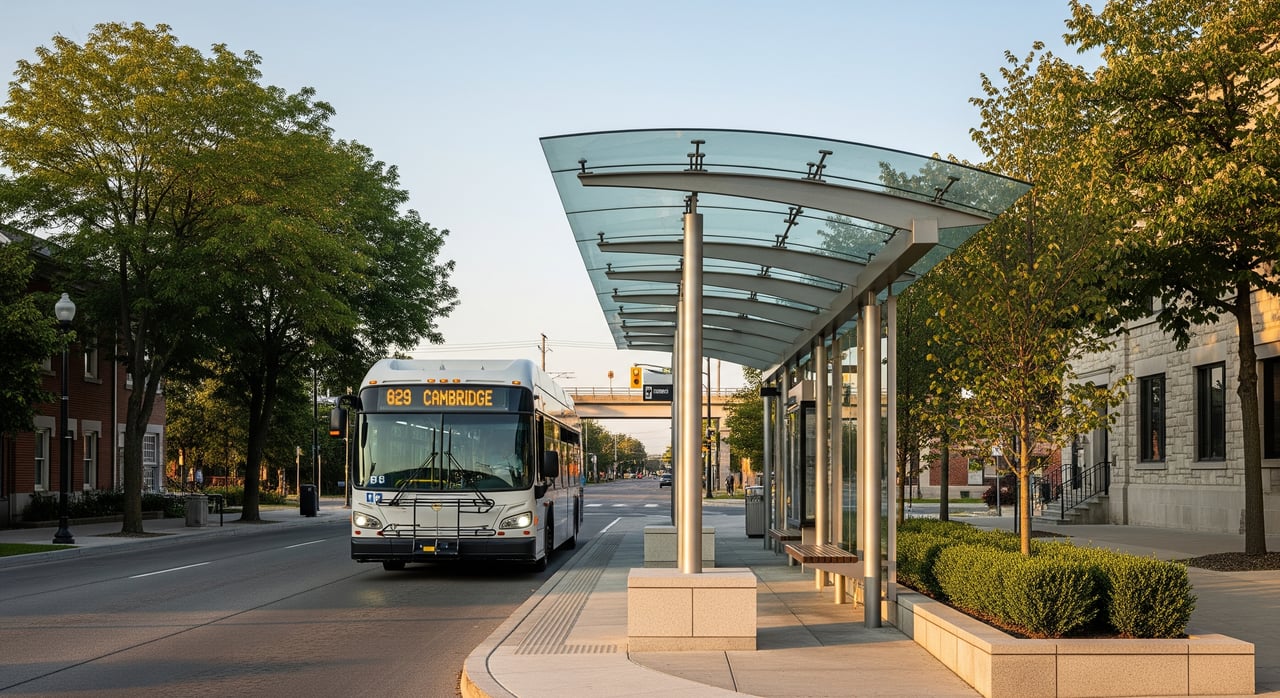
Is your next great buy hiding along a bus route that’s about to become rail? If you invest in small multi or townhome product, Cambridge’s 302 ION Bus corridor offers income today and a clear, milestone-driven path to future upside. You want a plan that works whether or not Stage 2 LRT arrives on your timeline. In this guide, you’ll learn how to pick locations, model scenarios, manage risk, and time your exit around real transit milestones. Let’s dive in.
Why the 302 ION corridor matters
The 302 ION Bus is a high-frequency rapid bus that runs the Region’s rapid transit spine and links Cambridge with Kitchener–Waterloo. It serves as an interim and complementary service while long‑lead Stage 2 LRT planning advances. That makes it a practical anchor for investors who want real ridership now, with potential re-rating as rail moves through approvals and procurement.
Stage 2 LRT is planned to extend rail toward Cambridge. The path from planning to commissioning is multi-year and can change with funding or scope. Treat rail as upside and build your numbers so they work on bus service alone.
Market signals to watch
Population and household growth across Waterloo Region have been strong for decades thanks to employment clusters, immigration, and relative affordability versus the GTA. Cambridge’s demand profile is tied to region-wide jobs and commuting patterns. Keep your thesis tied to real growth drivers rather than a single rail headline.
Rental demand hinges on vacancy, rents, and new supply. Track the latest rental market reports for the Kitchener–Cambridge–Waterloo area to gauge vacancy trends and rent levels for smaller multi. Cross-check with local listing and sales stats to read absorption and pricing pressure.
New supply along the corridor affects absorption timing. Watch municipal planning applications, building permits, and site plan approvals within 800 meters of stops to understand pipeline risk for your chosen product type.
Where to buy along the corridor
Tier 1: 0–400 meters
This is the core station area. You often see the strongest rent resilience and long-term land appreciation here. Expect higher land prices and more competitive bidding, which can favor redevelopment partnerships or denser formats.
Tier 2: 400–800 meters
This zone balances price with demand. It fits small multi, stacked townhomes, and medium-density multiplex opportunities. If zoning supports missing-middle housing, Tier 2 can deliver healthy cash flow with room for value-add.
Tier 3: 800–1,200 meters
This is a corridor-supporting zone that can benefit from broader policy shifts. You may find modest premiums if corridor policies expand and if walkability and bus frequency remain strong. Run conservative rent and exit assumptions here.
Property types that work
Small multi conversions
Three to twelve unit conversions can deliver faster cash flow and simpler execution. Focus on areas where multi-res is permitted or where conversion is a defined path. Stabilized income plus proximity to rapid bus stops positions you for a step-up if station-area policies advance.
Townhomes and multiplex infill
Duplexes, triplexes, fourplexes, and stacked townhomes fit well on parcels that align with intensification policies. These formats can phase in, letting you stage capital and manage risk.
Commercial-to-residential
Underused retail or shallow strip plazas along the corridor can convert to small residential blocks. This play needs solid planning work, but proximity to transit and amenities can anchor demand.
Planning checks before you write an offer
- Official Plan and corridor designation. Confirm if the site sits within a transit-supportive or mixed-use corridor or a planned intensification area.
- Zoning permissions. Validate permitted use, density, height, setbacks, and parking. Ask about draft by-law changes for transit corridors.
- Station-area or mobility hub policies. Secondary plans can clarify densities, phasing, and public-realm expectations.
- Development charges and parkland. Quantify DCs, community benefits, and parkland dedication in your pro forma.
- Servicing capacity. Confirm water and sewer availability and any upgrade timelines.
- Site constraints. Screen for contamination, heritage status, floodplain, topography, and tree preservation requirements.
Model returns in three scenarios
A scenario-based model keeps you disciplined as Stage 2 LRT progresses. Build each case into your underwriting upfront.
Base case: bus only
Underwrite on today’s transport and growth assumptions as if LRT does not arrive. If your deal pencils here, you have a durable foundation.
Transit-confirmed case
Assume modest rent and value lift once approvals, procurement, or construction financing are firmly confirmed. Treat this as a timed step-up, not an immediate surge.
Open-case: LRT operational
Only layer meaningful upside once the system is open and ridership patterns are proven. This protects you from schedule slippage.
Timing, absorption and exits
Short term, target stabilized or value-add assets that cash flow within 0 to 3 years. Mid term, 3 to 8 years, hold sites as LRT advances through approvals or procurement, positioning for a price re-rating at key milestones. Long term, 8 years and beyond, land assembly or redevelopment near planned stations requires patient capital.
For small 6 to 12 unit buildings or townhome blocks, absorption can be brisk if priced to market and located near amenities and transit nodes. Typical absorption for new mid-rise or stacked-townhome formats in strong Ontario markets often falls within 6 to 18 months after completion, but this varies with product, pricing, and macro conditions.
Plan exits around real triggers. Consider selling after rezoning or a station-area plan is adopted, at a procurement award, at the start of LRT construction, or once provincial funding is confirmed.
Risks and how to mitigate
- Transit delivery risk. Delays or scope changes can defer value uplift. Mitigate by buying for cash flow first.
- Policy and regulatory change. DC updates, parking rules, or approvals processes can shift. Keep entitlements flexible.
- Construction and financing risk. Labor, materials, and interest rates can move. Add contingencies and use sensitivity analysis.
- Market risk. Oversupply or macro slowdowns affect rents and absorption. Track pipeline and price with discipline.
- Site-specific risk. Environmental issues, heritage, or servicing delays can alter timelines. Front-load due diligence.
Street-level scouting checklist
- Map exact distance to the nearest 302 ION bus stop and any proposed LRT station areas. Calculate 400 and 800 meter walks.
- Walk the block. Note grocery, parks, and services within 400 meters and check pedestrian connections.
- Identify low-intensity sites. Look for surface parking, single-story retail, or deep lots that fit missing-middle formats.
- Speak with planning staff. Ask about active applications, council motions, and corridor-specific policies.
- Verify servicing. Confirm water and sewer capacity and any planned upgrades.
Two investor plays to consider
Rent-first small multi
Buy within 400 to 800 meters of current 302 stops where rents are solid. Execute light value-add, stabilize, and refinance or hold. If Stage 2 reaches a firm milestone, you can consider selling into renewed demand.
Rezoning or assembly near nodes
Target underperforming commercial or shallow lots near identified future stations. Pursue rezoning for stacked towns or a small 6 to 12 unit building. Partner for entitlement and stage the build to manage risk.
Pro forma inputs to pressure-test
- Purchase price per unit or per developable square foot.
- Hard costs per unit or per square foot, with an allowance for inflation.
- Soft costs, including design, approvals, off-site works, and marketing.
- Rents, rent growth, and vacancy anchored to current reports.
- Exit cap rate based on local small-multi or townhome portfolio comps.
- Timelines for permits and completion, with sensitivity bands.
Practical next steps in Cambridge
- Confirm corridor policies in the City of Cambridge Official Plan and zoning by-law.
- Pull the latest regional population forecasts and municipal growth targets to frame demand.
- Review rental market reports for the Kitchener–Cambridge–Waterloo area for vacancy and rent trends.
- Track municipal applications and permits within 800 meters of the corridor to size the pipeline.
- Set alerts for regional Stage 2 LRT milestones so you can align buys, financing, or exits with real events.
Work with a trusted advisor
You deserve a clear, step-by-step plan tailored to your goals. If you want help sourcing, underwriting, and executing a corridor-focused buy in Cambridge or nearby markets, our team offers buyer representation, listing and marketing, and leasing and property management support for investors. Let’s build a strategy that performs on bus service today and positions you for LRT upside tomorrow. Schedule Your Consultation with Unknown Company.
FAQs
How does transit proximity affect small-multi rents in Cambridge?
- Properties within roughly 400 meters of rapid transit corridors often see stronger rent resilience and leasing velocity, with outcomes dependent on product, pricing, and broader market conditions.
What is the realistic timeline for Stage 2 LRT to Cambridge?
- Stage 2 involves multi-year planning, environmental assessment, design, procurement, construction, and commissioning; treat it as a long‑lead project with milestones rather than a fixed date.
What due diligence is essential before a multiplex conversion?
- Confirm zoning permissions, parking and setback rules, building code requirements, and any need for variances or a zoning by-law amendment; verify servicing capacity and screen for heritage or environmental constraints.
How should I account for development charges and parkland in my model?
- Review the current municipal development charge schedule and parkland dedication rules and include them as material soft costs in your pro forma with a contingency.
Which milestones can trigger a pricing re-rating along the corridor?
- Adoption of a station-area or secondary plan, a procurement contract award, a confirmed funding announcement, or the start of major LRT construction can each catalyze renewed buyer interest and value shifts.